“From knowledge to
the power to act”

Food is Care

FR | EN

The discipline

Culinary Medicine

An emerging academic and clinical discipline at the global scale.

Université Laval is the first Francophone university in the world to offer accredited training in Culinary Medicine.

Definition

What is Culinary Medicine?

The Culinary Medicine that we are developing is neither a nutrition course nor a recipe workshop. It is a capacitating pedagogy — that is, learning through action — which combines medical and nutritional knowledge while using the culinary arts as a pragmatic means of intervention. Its praxis holds in four verbs: to feel, to act, to embody, to connect.

Learn more

The ecstasy of taste — Culinary Medicine

Mission

The taste of care, the care of taste.

To nourish the transformation of care through and for food:
from enduring to acting, with the embodied gesture that makes us capable and connects us.

Vision

Every gesture, an act of care.

A world where every food-related gesture becomes a shared act of care
— for magnified lives and a common health, human and planetary.

Our conviction

Thought does not act.

Change happens through and in behavior. Only the gesture, repeated and embodied, transforms. We do not transmit abstract knowledge: we generate concrete capabilities — that is, the real freedom to act.

Our distinctive approach

Radically different:

Where traditional nutrition education informs, we activate capabilities.
Where it prescribes norms, we restore the power to act.
Where it addresses cognition, we engage the whole body — hands, mouth, gestures.

What is at stake is not an improvement of nutrition education, but a paradigm shift.

As Franco Dragone reminds us: “The approach generates the product. If we do not change the approach, we will always produce the same thing.”
No problem can be solved without changing the level of consciousness that generated it.

Critical distinctions

Culinary Medicine Cooking class

Cooking class Culinary Medicine
The recipe: the end goalThe recipe: the means
Teaches: recipesDevelops: the capacity to act through experience
Aim: to reproduceAim: to act — to transform oneself — to connect
End: external — the dishEnd: internal — the person

Culinary Medicine Nutrition education

Nutrition education Culinary Medicine
Aim: to inform on what to eatAim: to transform the capacity to act
Mode: to prescribe normsMode: to capacitate (make capable of acting)
Approach: normativeApproach: pragmatism (the art of experience)
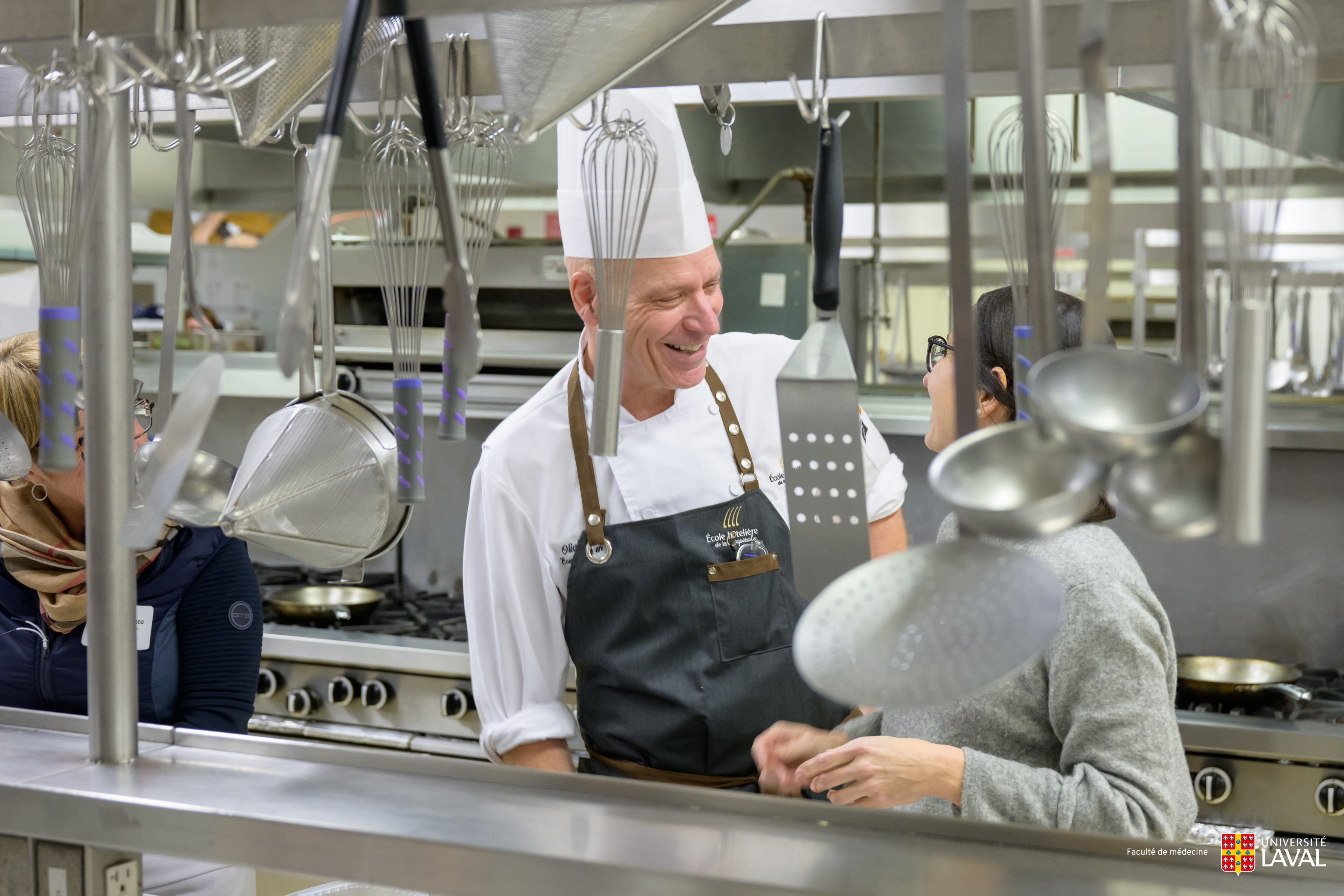
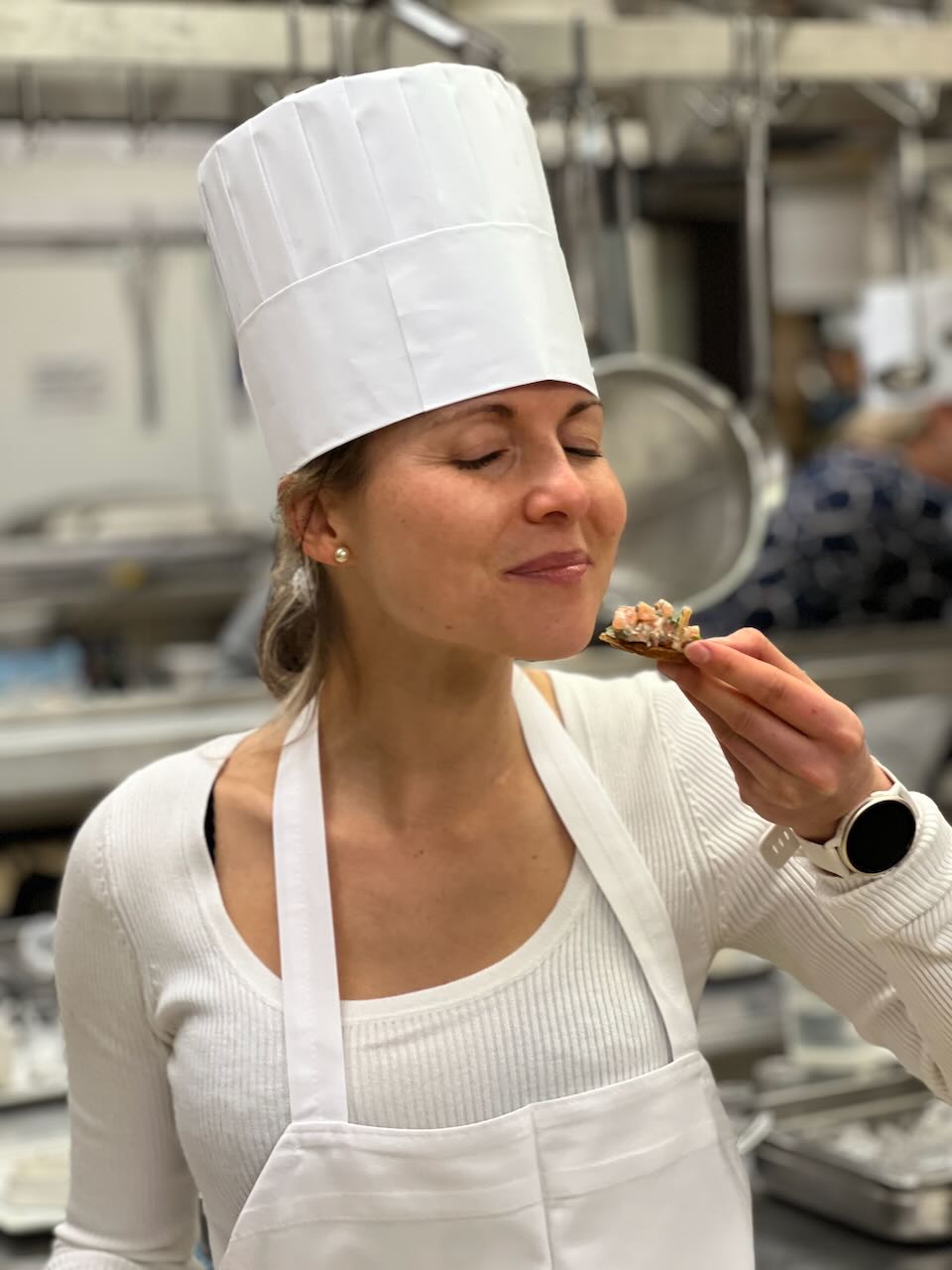
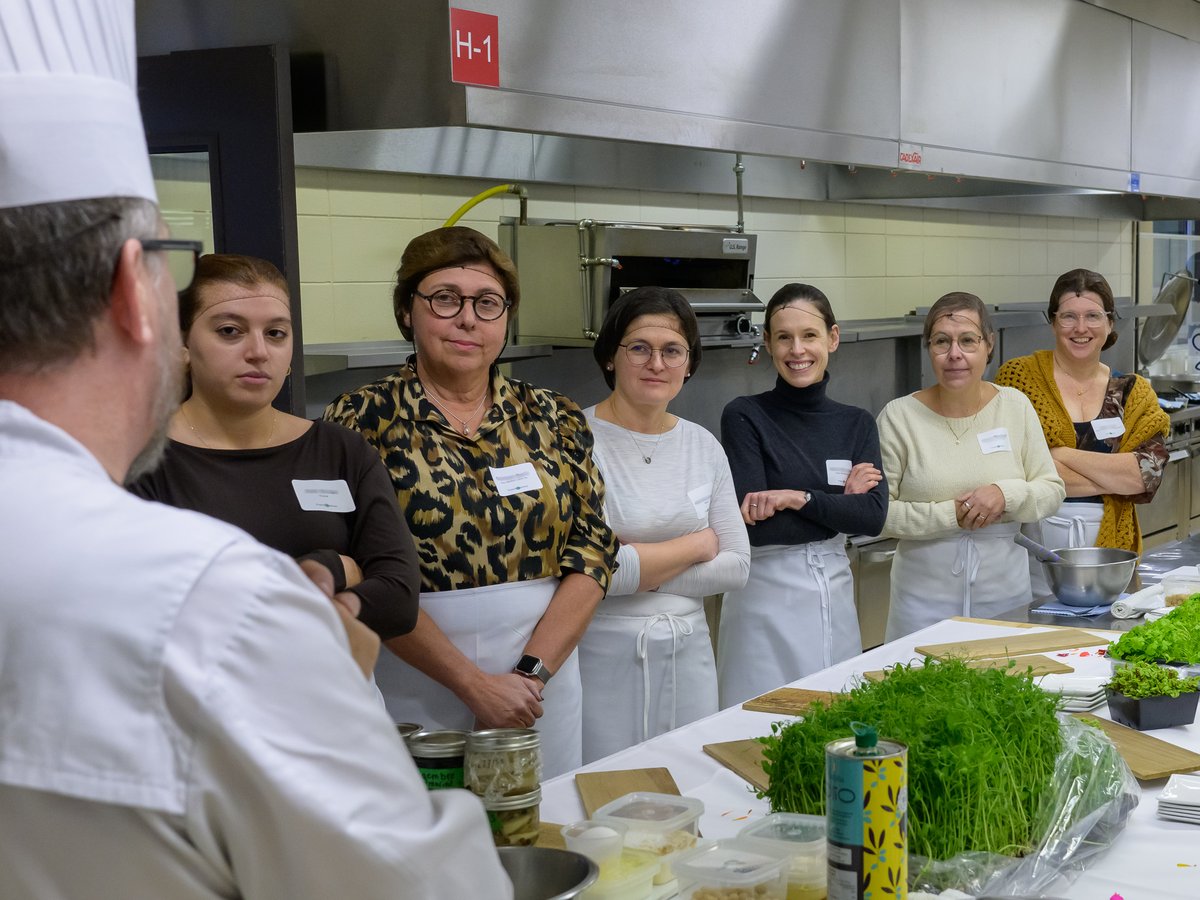
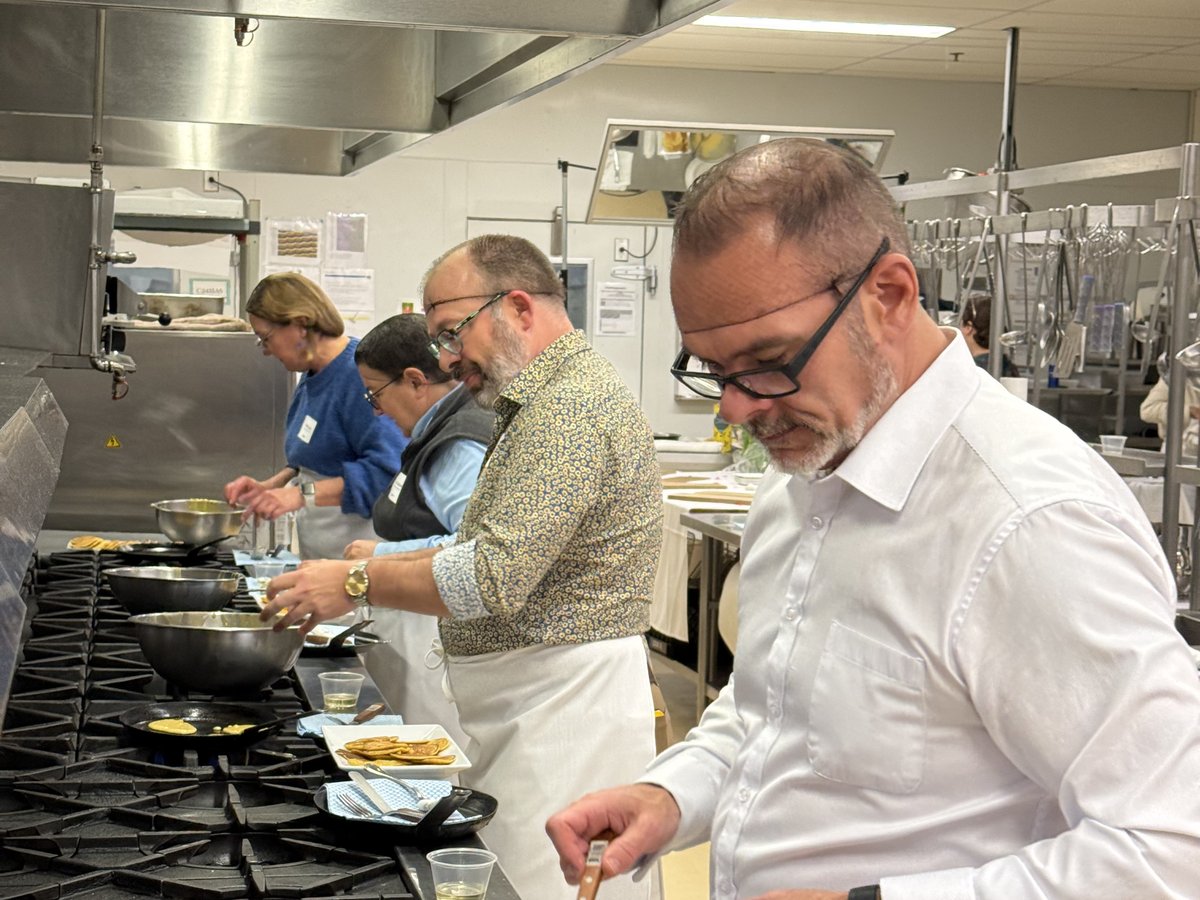
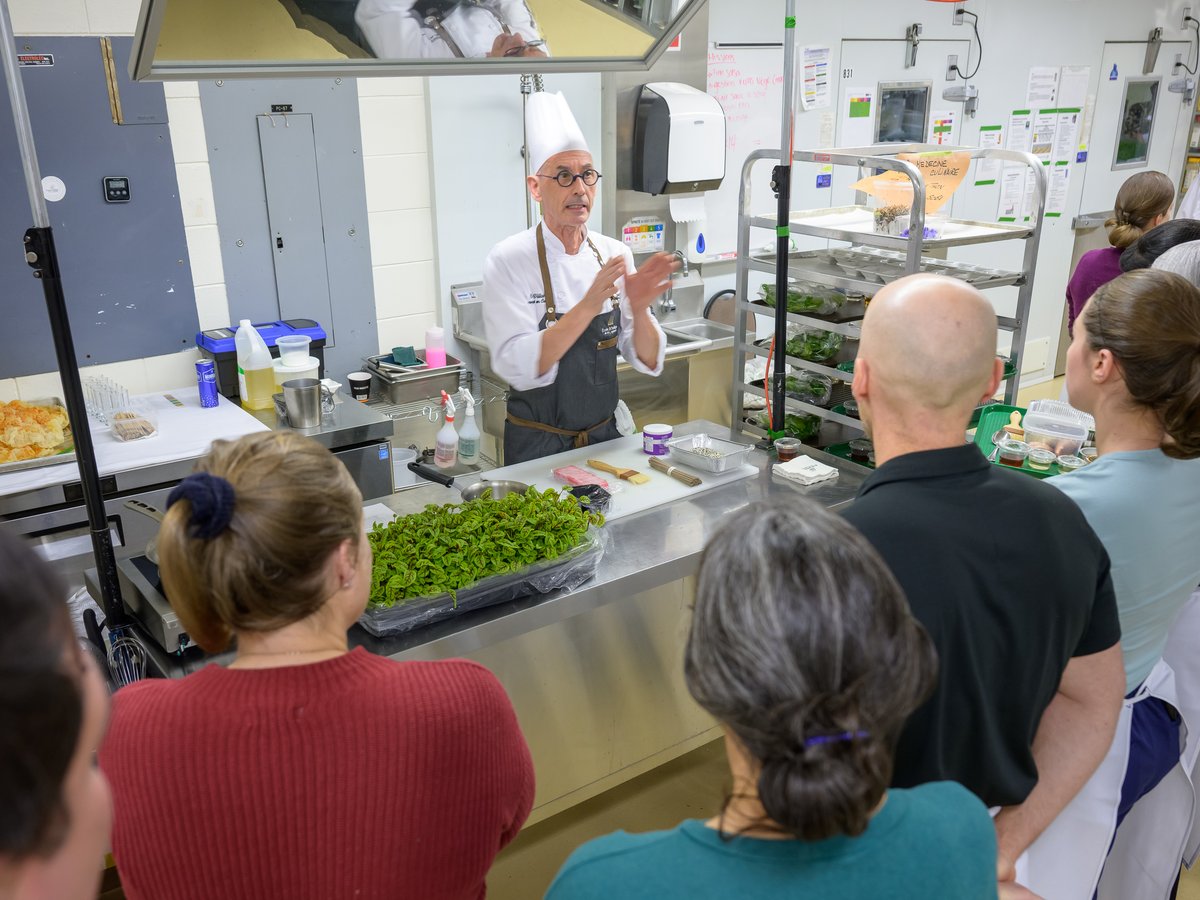
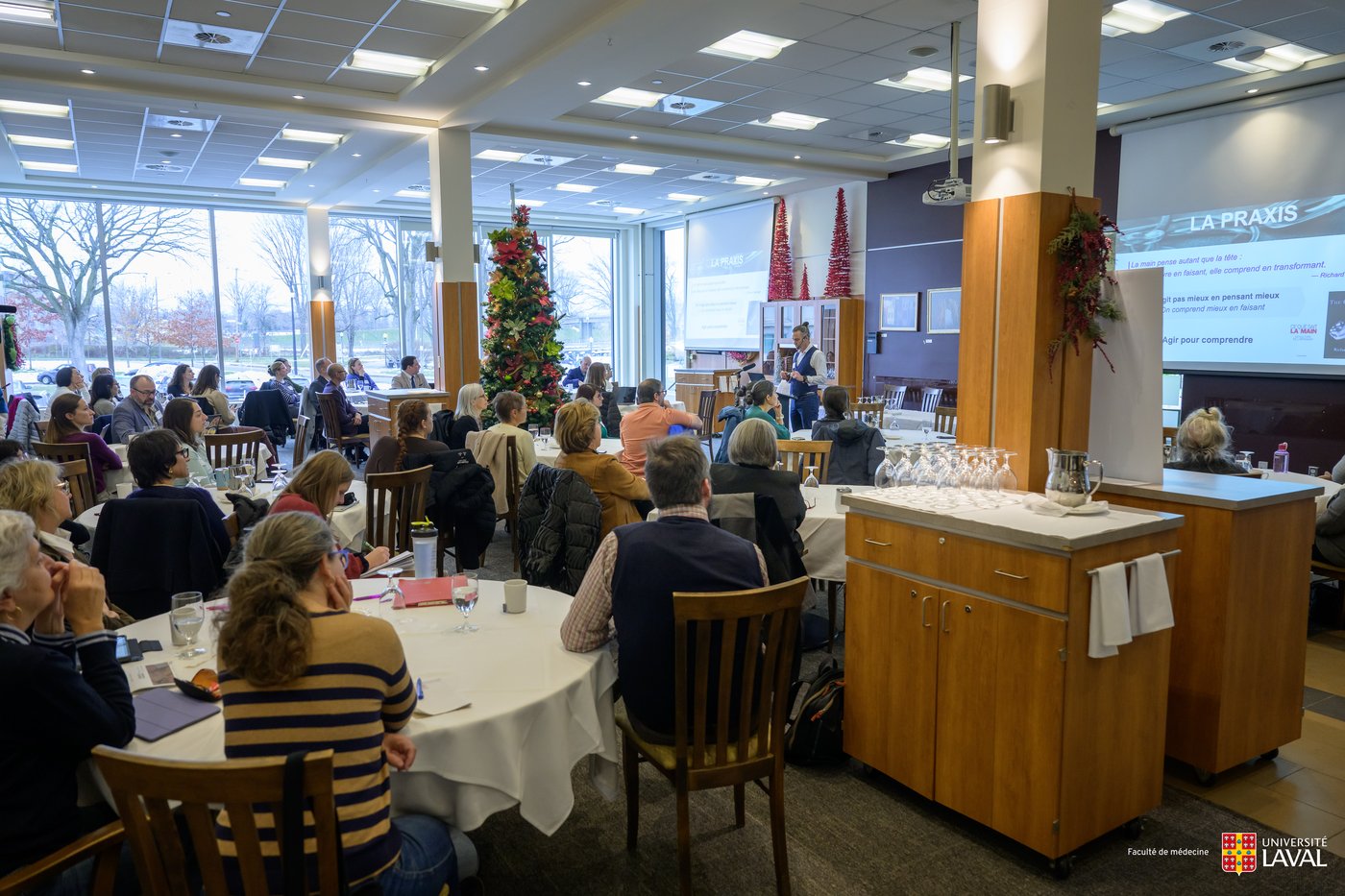
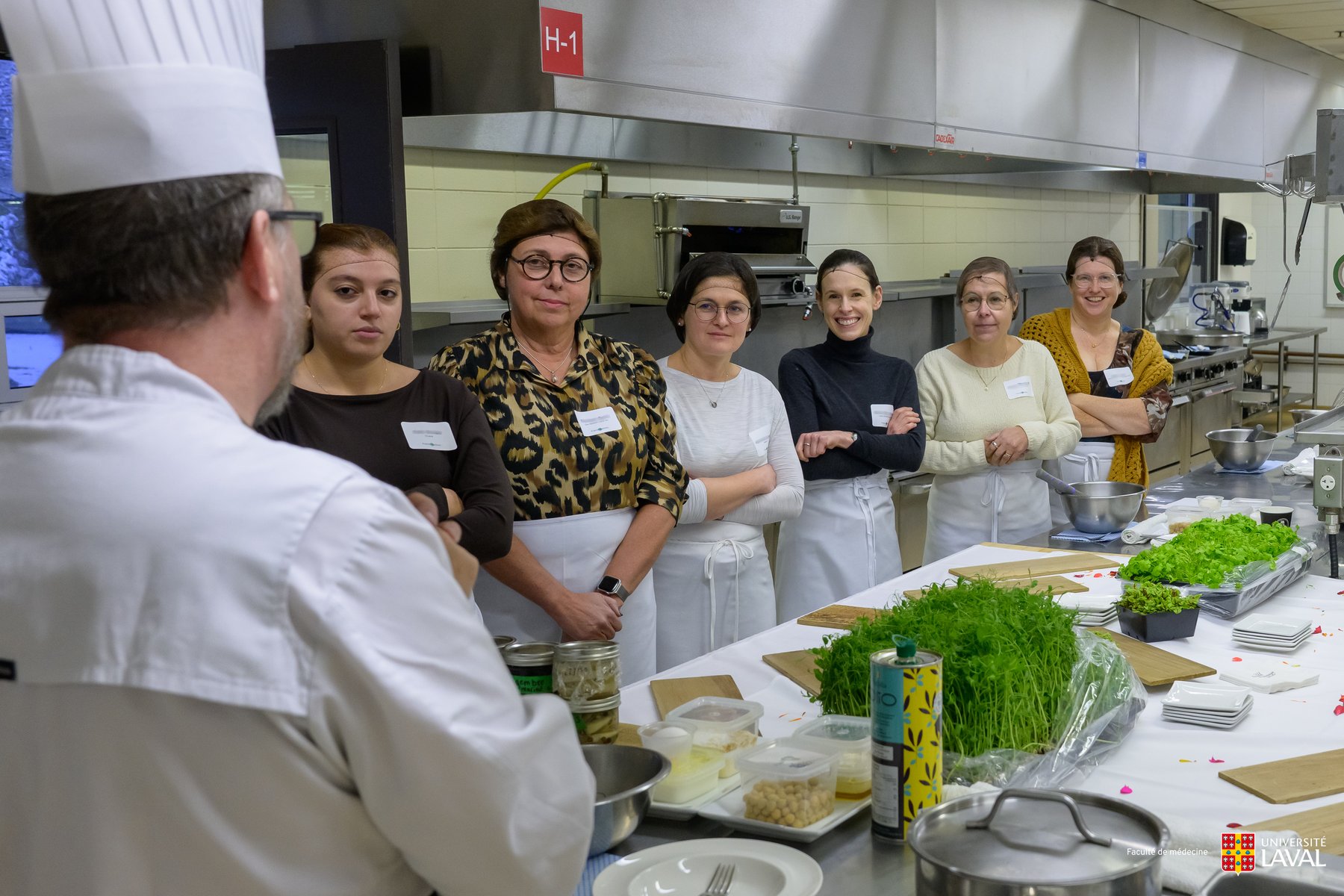
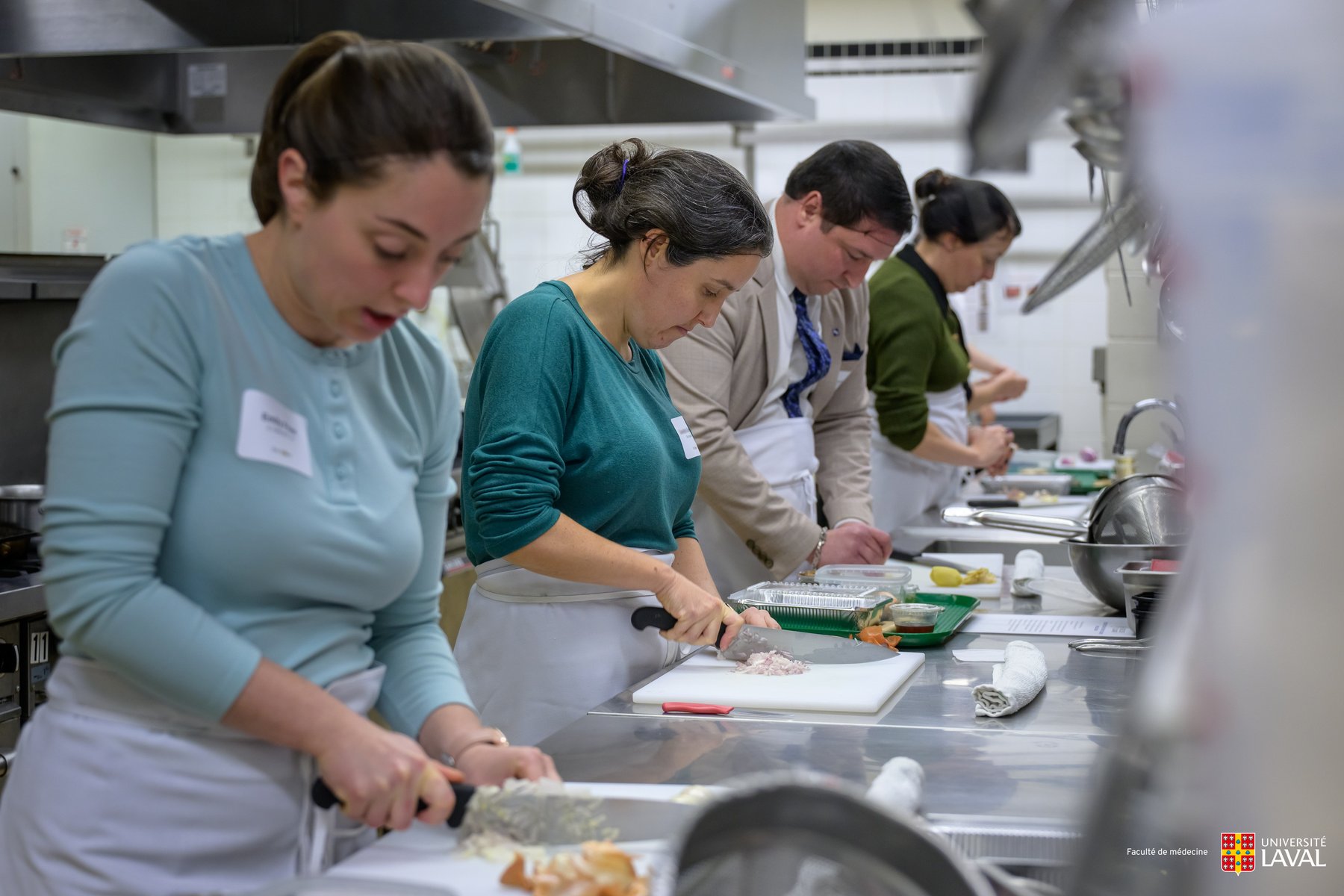
Participants at the Francophone Conference on Culinary Medicine 2025 — sharing in the kitchen Culinary Medicine workshop — chefs and participants in action Chef Éric demonstrating — Francophone Conference on Culinary Medicine 2025

“We do not act better by thinking better —
we understand better by acting.”

— Michel Lucas

Research

An active research program

Culinary Medicine is not only a pedagogical or clinical approach: it is also a research program structured around five complementary axes, which examine what the gesture, the shared meal and the freedom to act transform in health and care.

Michel Lucas at an academic conference

1Pedagogical evaluation of Culinary Medicine

Measuring what the gesture transforms.

When medical students learn the gestures, share a meal, their stories and their vulnerabilities — and meet the other in their otherness — before becoming physicians, what changes in their clinical practice, their personal habits, their way of dialoguing with patients? Does capacitating pedagogy leave measurable traces, and which ones?
2Food capability

Measuring the real freedom to act.

Knowing nutritional recommendations is not enough to put them into practice. Food capability — a founding concept of Culinary Medicine, adapted from Amartya Sen to the food domain — refers to the real freedom to understand, choose and act with and through food. How can we observe it, how can we measure it?

3Culinary Medicine for population health

Restoring the power to act and measuring its benefits.

In some contexts, what is lacking is neither knowledge nor motivation — but the material, cultural and social conditions that make action possible. Culinary Medicine then addresses these populations: co-building with them programs rooted in their stories, their culture, their origins — and measuring the benefits on food agency and health.

4Flavour, sensoriality and embodied learning

Measuring sensory skills, from questionnaire to physiological test.

Flavour — what we perceive when a food enters the mouth — connects olfaction, taste, oral touch and swallowing. Today, these dimensions are studied by disciplines that do not speak to one another: ENT, medicine, nutrition, psychology, philosophy, culinary science. Culinary Medicine proposes a unified methodological project to connect them.

5Nutritional epidemiology

Producing evidence through epidemiological rigor.

Thirty years of work with cohorts, clinical trials and meta-analyses have made it possible to understand how food shapes the health of populations. This scientific foundation — inherited from Harvard and deployed at Université Laval — scientifically anchors the clinical hypotheses of Culinary Medicine.

Participants at the Francophone Conference on Culinary Medicine 2025

Programs and services

MED-1939
Faculty of Medicine

Accredited course, 3 credits

Culinary Medicine course at Université Laval. A capacitating pedagogy integrating medical knowledge, immersive culinary workshops, narrative Culinary Medicine, and the collaborative project “Cook for the next.”

Learn more

Francophone Conference
on Culinary Medicine

Training for professionals

An immersion day in Culinary Medicine — an annual event (Quebec City, Lyon, Paris) bringing together those driving the shift towards food as an act of care (health professionals, teachers, decision-makers, etc.).

Learn more

NANOprogram in
Culinary Medicine

Continuing education

A short continuing-education program for health professionals (Université Laval). Available online, centered on capability development. Will allow those who enrol to complete training similar to that of medical students.

In development

Custom workshops
in Culinary Medicine

Businesses & institutions

Programs tailored to the needs of organisations. An embodied, contextualised approach. In a team-building format, culinary and sensory practices led by graduate chefs allow participants to learn and experiment in a convivial setting, including a shared meal as a cocktail reception.

Get in touch

Event

Francophone Conference on Culinary Medicine (FCCM)

Participants at the 2nd Francophone Conference on Culinary Medicine 2025 — culinary workshop at Université Laval

FCCM is the annual gathering of those who make food an act of care in the Francophone world. Researchers, clinicians, chefs, educators and decision-makers meet to present their work and advance Culinary Medicine.

Three Quebec editions to date; first European edition in 2027.

Participate or become a partner

“To make the culinary gesture an act of care.”

From knowledge to the power to act

Culinary Medicine is a discipline under construction. If you share this vision — that care passes through the gesture, that knowledge must become act — join the movement.

Contact me